Our APPROACH

Community

Keeping a Quiet Presence

Visual Aesthetics

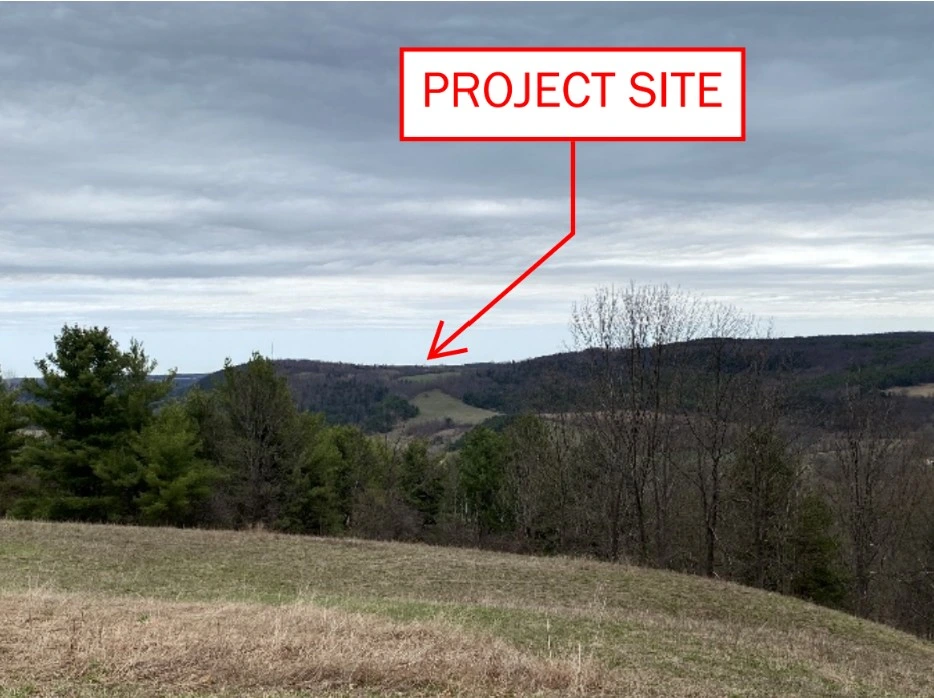
A Visual Impact Assessment (VIA) report analyzes the visibility of the project from roadways, adjacent properties, and publicly accessible locations. Conducted in March of 2025, at which time all wooded areas were lacking leaf cover, it was determined the Berne Solar Project is currently obstructed from most views by the existing vegetation and topography.

Balloon/Flag Study

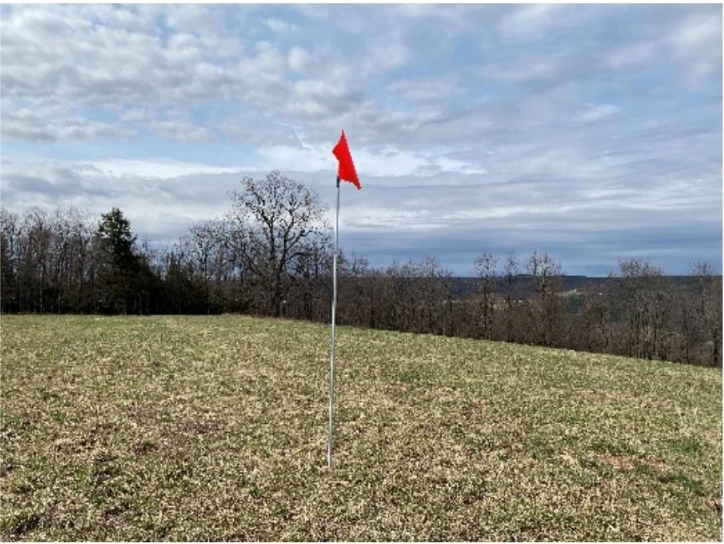
The Town of Berne required a visual assessment using balloons or markers to show how visible the solar arrays would be from nearby properties.

✔️ The planning board required temporary visual markers placed at the          proposed array location.
✔️The markers simulate the height and position of the panels so residents       and officials can judge visibility.
✔️This visual monumentation was scheduled for late April 2025.
✔️Notices were sent to residents within approximately one mile of the site,      and a notice was placed in the local newspaper.

As of last report, the Town of Berne received no reports of the balloons being visible.  
Environment

We Respect Our Surroundings

Wetlands and Water Resources
Wetland scientists identified one wetland and a nearby perennial stream on the RIC Berne Solar Project parcels, and the solar array is sited to fully avoid both features.
Compliant
Wildlife and Wildlife Habitat
Our inhouse Environmental Affairs team has initiated formal communication with the appropriate state and federal regulatory agencies to verify full compliance with applicable environmental requirements and to proactively identify and avoid any potential impacts to sensitive receptors.
Compliant
Floodplains
Not located within and will not impact any floodplains, as confirmed through consultation of the Federal Emergency Management Agency (FEMA) Flood Insurance Rate Map (FIRM) and Flood Insurance Study (FIS) for Wyoming County.
Compliant
CONSTRUCTION TIMELINE

Installation Process and Proper Maintenance

The tentative construction schedule assumes that mobilization and construction would commence 2-4 weeks after a building permit is approved. The expected overall timeline for construction and commissioning is approximately 18-20 weeks.

Construction is generally divided into several phases:

01
Mobilization
1 Week
Mobilization of construction crews and delivery of initial construction equipment.
02
Site Preparation
and Civil Work
3 Weeks
This phase starts with the implementation of erosion and sedimentation control measures being put in place prior to the start of construction. It continues with clearing and grading as well as the construction of the driveway and interior access road for the Projects.
03
Mechanical
installation
10 Weeks
This phase includes the installation of solar racking, which for this project is a single-axis tracker. The installation begins with post-driving, which is the only type of construction work that will generate higher noise levels but is limited only to 1-2 weeks and will be conducted within regular working day hours, to not cause any significant disruption to neighbors.

The rest of the activities include installation of the solar trackers, PV modules, inverters, transformers, etc. None of these activities generate any excessive noise, dust, or other forms of disturbance to the surrounding neighbors.
04
Electrical
installation
6 Weeks
Electrical work includes the installation of underground cables, wiring and termination of above ground cables on the solar trackers (connecting all modules into strings and connecting them to the inverters), wiring and termination of grid interconnection facilities.
05
QA/QC
inspections and
Commissioning
Regular quality assurance and stormwater management inspections will be implemented throughout the construction and installation period. Once all systems are installed and connected, a dedicated third-party engineering crew, along with the utility’s engineers, will conduct the final inspections and testing procedures before the system can be placed into operation and start generating and exporting energy into the grid.
01
Mobilization
1 Week
Mobilization of construction crews and delivery of initial construction equipment.
02
Site Preparation
and Civil Work
3 Weeks
This phase starts with the implementation of erosion and sedimentation control measures being put in place prior to the start of construction. It continues with clearing and grading as well as the construction of the driveway and interior access road for the Project.
03
Mechanical
installation
10 Weeks
This phase includes the installation of solar racking, which for this project is a single-axis tracker. The installation begins with post-driving, which is the only type of construction work that will generate higher noise levels but is limited only to 1-2 weeks and will be conducted within regular working day hours, to not cause any significant disruption to neighbors.

The rest of the activities include installation of the solar trackers, PV modules, inverters, transformers, etc. None of these activities generate any excessive noise, dust or other forms of disturbance to the surrounding neighbors.
04
Electrical
installation
6 Weeks
Electrical work includes the installation of underground cables, wiring and termination of above ground cables on the solar trackers (connecting all modules into strings and connecting them to the inverters), wiring and termination of grid interconnection facilities.
05
QA/QC
inspections and
Commissioning
Regular quality assurance and stormwater management inspections will be implemented throughout the construction and installation period. Once all systems are installed and connected, a dedicated third-party engineering crew, along with the utility’s engineers will conduct the final inspections and testing procedures before the system can be placed into operation and start generating and exporting energy into the grid.
PROJECT MANAGEMENT

Operation and Maintenance

The solar array, inverters, transformers, and all safety systems are fully automated and remotely monitored 24/7 through an electronic system and do not require constant on-site supervision or manual operation. As described below, the Project requires only periodic inspections, servicing, and maintenance, conducted by dedicated crews, per schedule or as needed.

Beyond the construction period, the Project requires very minimal on-site personnel. Regularly occurring management operations include landscaping (mowing and vegetation management) and annual inspections of the mechanical and electric installations and equipment. All these operations are performed by small crews and do not generate notable noise or traffic that is uncommon for an agricultural-residential or residential neighborhood. Herbicides, pesticides, and cleaning chemicals will not be used during construction or during operation and maintenance of the Project.


During its normal operation, the solar installation:
  • Will not generate significant vehicle traffic
  • Will not generate any gas emissions
  • Will not pose a risk of any contamination of air, soil, or water resources
  • Will not generate waste
  • Will not require discharge of wastewater
  • Will not generate noise that would exceed the accepted standards
Project Removal

A Responsible Return to Its Original State

Solar panels available on the market today are typically designed to last for at least 25 - 30 years and the Project will continually maintain the solar arrays and related equipment for the life of the Project. At the end of their useful life, the Project may be renewed or they may permanently cease operations, at which time the Project removal plan (approved by the Town of Berne) will be implemented to remove, reuse, and/or recycle equipment and related materials to return the Project area to its pre-construction condition so that it is available for agriculture and other open space usages as determined by the landowner at that time.

The removal of the Project is, in many ways, the reverse of its construction. Much of the same equipment that was used in the construction of the Project, such as trucks and backhoes, will again be used in the removal of the components. Steel, cable, and concrete will be removed and transported off-site for recycling and/or disposal at approved facilities. Licensed off-site disposal facilities will be identified at that time, as the availability of facilities is likely to change in the decades during the Project’s useful life. The removal of the facility and the site restoration are guaranteed through a bond, whereby the Town of Berne is the beneficiary. It is also important to mention that it is in the interest of the Project to recycle the bulk of the materials and equipment, which are projected to have a higher salvage value than the total cost of the removal and restoration.